The Beauty of Promotion: How Do You Perform SEO Without Hurting Your Website’s Visibility?
When it comes to your website, you don’t have to choose between beauty and character. With the right approach, you can enjoy both. On carefully crafted sites, branding and visibility matter enormously. A clean look, animation, and user experience are no less critical. The organic promotion process (SEO) is also a crucial step for success and for driving business results – both leads and sales. But how do you combine the two? Plenty of people argue that SEO “uglifies” a site, loading it up with content and copy to make it ideal for Google but, in some cases, less ideal for the eye.
Thanks to the extensive experience we’ve built running effective SEO processes, and working with brands for whom visibility and branding come first, we’ve learned a lot on this topic. Here are a few key insights that will let you enjoy a site that’s both beautiful and pulling in more quality traffic.
Mirror, mirror on the wall, whose site is the fairest of them all?
First, it’s worth understanding that a beautiful, compelling website is beautiful because someone put real time and thought into it. A quality site isn’t built for fun; it’s born out of a need to convey a certain mood and the brand’s character. The first step is simple: understand that a site’s look matters even more than its SEO. Quality over quantity. Even with thousands more visitors, what matters more is that the ones who do arrive get the right impression. Some brands would rather land one high-quality visitor than pull in hundreds of casual ones. This approach is especially common on luxury brand sites that target a narrow but precise audience. Quality over quantity. That’s not to say SEO doesn’t matter – it’s critical – but visibility comes first. Only that way can we make sure the SEO process looks natural and doesn’t hurt the site’s look or the browsing experience.
A beautiful site, by design
What do an office tower, a light rail, and a website have in common? All three need solid infrastructure, or the results simply aren’t worth the effort.
Building your SEO foundation in at the specification and design stage lets you see the big picture and make sure the site is both search-engine-friendly and aesthetically inviting to visitors. On top of that, in the early build stages it’s easy to spot issues and handle them efficiently behind the scenes. Site already live? Like knocking down walls during a renovation, changing the promotional infrastructure afterward is probably more complex – but not impossible. It just takes some determination and a fair amount of work.
We get plenty of already-built sites handed to us for organic promotion, and as we said, when the site is already built, the approach shifts a bit. We don’t believe in putting Google front and center, piling on mountains of content. We put the visitor front and center. A site that fits what visitors want and need, a site that delivers what they’re actually looking for – that’s a site that improves organic promotion too. We always say you should build sites for people, not for search engines. A site that gives visitors the information they’re looking for in a way that’s convenient and visually appealing is a site with low bounce rates. Google has already evolved to treat browsing experience as a core ranking factor. That’s exactly why a well-built, visitor-focused site can easily outrank a site stuffed with content but saddled with an unfriendly look and interface. In short, we care about making sure browsing the site is comfortable, pleasant, and easy to navigate, and that design never comes at the expense of the user experience.
Separate content zones
One option is to funnel heavy, text-dense content into the blog. We manage plenty of promoted sites with short copy across the main pages, while the bulk of the text lives in the blog or some kind of knowledge hub. A well-built blog takes visual weight off the site and lets us concentrate promotion efforts in a dedicated content category. True, Google really does want quality copy on every page. But if cleanliness and minimalism matter to the brand, you can absolutely still promote the site without loading every page with content.
Another way to create a dedicated content zone is adding a glossary. It’s a great option that establishes the brand as an authority in its field and gives visitors an excellent information resource. Glossaries support promotion and bring in quality traffic. They don’t have to sit in the main menu – you can comfortably promote categories tucked away in the footer. Worth noting: Google knows exactly what’s going on – we’re not “trying to trick” it – but it crawls the content and surfaces it either way.
Ecommerce sites: organic promotion without design compromises
On ecommerce sites, keeping the look clean and simple matters even more. The focus is usually on product photos and short, sharp descriptions, and a wall of text overwhelms visitors and can easily distract or even discourage them. So how does that square with strong SEO? There are several effective tactics for promoting an ecommerce site through the smart use of SEO. For instance, it’s worth tucking product-page copy into an accordion (an expandable/collapsible menu) or separate tabs. With SEO and the right tools, you can make sure Google still successfully reads hidden text – content visitors can’t see unless they click to reveal it. You might be surprised to learn Google likes pages where not all the content is visible upfront and where users can navigate cleanly between sections or topics. Not all your copy needs to be dumped into one long SEO article.
Another interesting approach for ecommerce sites is investing in category pages as important SEO anchors. We obviously recommend adding a text block to every category page, but we’ve found that in a lot of cases you can land strong rankings on Google even when that text block sits at the bottom of the page. Even in highly competitive niches, we’ve found that given a good site and good products, Google doesn’t insist on the copy being placed at the top of the page. When we focus SEO effort on category pages, we’re essentially taking the pressure off loading up every other page on the site with content.

It’s worth checking yourselves
One of the important steps in an SEO process for a carefully designed site is running analytics. We care about measuring whether the beautiful site is also a good one. Sometimes an overly animated, bouncy site actually drives people away and shortens time on site. Not every site the brand manager thinks looks great is actually beautiful in the eyes of visitors – or Google. Visitors vote with their feet. If the site isn’t comfortable, is slow, or jumpy, if the design isn’t clear – visitors will simply leave.
After analyzing the analytics data and comparing against other sites in the same category, we can tell you whether the beautiful site is also performing beautifully. More than once we’ve been surprised to see clean, understated sites with a small amount of high-quality copy performing excellently, in contrast to the popular belief that more content is always better.
Text – LIVE only
Live text is text you can edit – text that isn’t baked into an image but entered directly into the site. In short, text Google can actually read. How important is that? About as important as oxygen. It’s worth investing in high-quality, clear, easy-to-read fonts and clean designs that carry the message of the words visually too. In certain spots, like banners, it’s fine to layer text over an image, but as a rule of thumb, live text is always better. In the right font, your content will look great. When it’s also well-written and delivers value to the visitor, your content will take the site several levels further.
Let’s talk about it
Your relationship with your design and development team is a real relationship, and here too, there’s no substitute for good communication. SEO people specialize in digital and advertising, and great SEO people need to understand branding and know how to translate all the requirements to the developers so they can bring the vision to life. A site that both looks great and ranks first on Google is the result of thoughtful teamwork between you, designers, developers, and promotion specialists.
Let’s step outside the site for a second
The best way to promote a site without hurting its look is to promote it not just on the site, but off it too. Offsite promotion refers to articles on strong portals or other websites that reinforce the brand without requiring any change or added content on your own site. There, there are no constraints around look, design, or branding considerations. The offsite approach is very popular, and it’s a great way to promote a site while keeping it clean and elegant.
Ultimately, the key is a mix of experience and judgment, listening and dialogue. There are times we’ll insist on an SEO element we know is critical to performance, and times we’ll know to let go and understand the world doesn’t run on SEO alone. And most important to remember: we’re here to create a quality browsing experience for visitors.


Still curious?
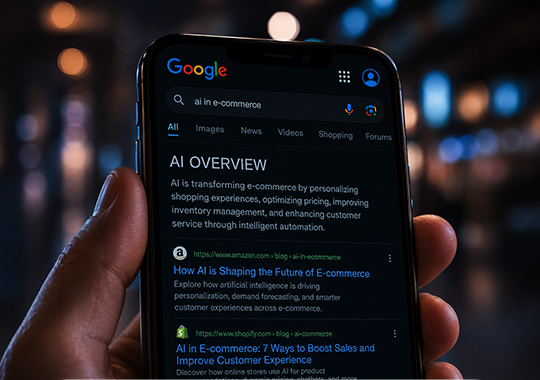
Is Your Website Ready for the Big Shift? AI Overview Is Changing the Rules of the Game

How Do You Create Content Built for the AI Era?
