SEO and GEO for E-commerce: How to Crush the November Sales Season
Plan, Plan, and Plan Some More
Planning is the key to winning November. Actually, it’s the key to any SEO effort.
Our first tip for every brand that sells online: dig into your data and make a plan. Ask yourself:
- Which products and categories did great last year?
- What’s our big deal going to be?
- Where do we have stock we need to push?
- What are our best sellers right now?
Got the answers? Great. Now kick off your SEO work at least 3 months before November.
Why 3 months? Because SEO takes time. There’s onsite work and offsite work. Google might crawl your site only once a week, or even less. And even after it crawls, Google can take a while to react. So if you want results on time, start early. While your competitors are just starting the race in November, you’ll already be months ahead on the same keywords.
What Should You Optimize?
For most sites, we recommend focusing on categories. Now, you’re probably asking yourself:
“How on earth am I supposed to know in August which products will be on sale in November?”
Good news: you don’t need to know. Focus on categories, not specific products. Say you run a jewelry site. Last year your necklaces category killed it. Chances are it’ll do great again this year. So that’s the one to push. Plan ahead. Don’t wait until the last minute when the sale is already in full swing.
Pushing one specific product with SEO and GEO can be risky. It might sell out. Or your focus might shift. Google, on the other hand, loves a strong, stable category with lots of products. Of course, there are exceptions. For example, a brand with a strategic best seller might want to push that one product directly.
Why This Matters (and What Many Brands Miss in November)
Every online store has a revenue pie. That pie is split into 3 main slices:
- Paid ads
- Direct: revenue from SMS, email, and direct visits
- Organic: traffic from search engines and AI engines
That last slice is the one brands usually take for granted. And it’s exactly the one they should grow. Organic traffic has no direct media cost. Unlike email and SMS, it’s not limited to people who already know you. It brings in new customers too. And these new visitors arrive with trust. Why? Because a smart chatbot recommended you, or because you’re #1 on Google. Many brands we work with get close to 30% of their revenue from organic traffic.
That’s the slice you want to grow. No direct media cost. New audiences. A real engine for growth.
November is all about paid campaigns. It’s the big, punchy boost that drives sales. And yes, paid ads are super important. But organic matters just as much. From our experience, search volume goes up for lots of terms in November. In other words, more people are searching for certain keywords because it’s shopping season.
During the sales season, lots of shoppers search Google for specific terms more than usual. And when they land on your site, they’re ready to buy. That’s called high shop intent.
Stay Alert in November
November is a big month for your SEO person. You might not know this, but SEO is often your site’s most loyal watchdog. Your SEO expert keeps your site healthy and running smoothly. We can’t count how many times the SEO person was the first to spot a glitch. Security issues, bugs, content problems, you name it.
Why them? Unlike your ad campaign manager, the SEO person is actually looking at the site. They scan it with advanced tools. They live inside its analytics. So they’re usually the first to notice when something breaks. Sounds like a small detail. But it’s actually a big deal.
All through November, our SEO team monitors sites and makes sure everything’s okay. The moment something goes wrong, they flag it. Then they explain the fastest way to fix it. For small or mid-size sites, every single day counts for sales. For big sites, a few hours of downtime can cost tens of thousands of shekels.
Google looks at lots of technical and content factors. But metrics like time on site, bounce rate, and conversion rate also tell you a lot. They show you how users feel and how the business is doing. A smooth user experience, easy-to-read text, clear headings, and more all help visitors find their way and get what they came for.
Plus, during the sales, your SEO person can share cool insights. Which categories get the most traffic? Which products are leading? Where is Google sending us right now? What’s working organically?

How Do You Scale with SEO?
The answer is simple: step by step.
We’ve seen plenty of sites grow. Some went from ₪20K a month to over ₪100K. Others crossed the million mark for the first time. One thing is clear: a successful site doesn’t scale without solid, smart SEO. SEO grows your traffic and sales without pushing your ad budget too far. That way, you don’t hurt your ROAS goals. SEO also shows you search volumes and insights. These help you manage purchasing, inventory, and how you display your products.
Growing about 5% organically each month. Weak or strong? Do the math. That’s around 80% growth in a year. And in two years? About 223%.
React Fast, in Real Time
Like we always say, every rule has an exception. We started by saying you need to plan six months ahead, maybe even a year. But Google pays extra attention to some sites. Big brands sometimes get crawled every day. If a brand launches lots of collections, Google may speed up crawling and indexing to match.
An experienced SEO agency will know how often Google crawls your site. If it’s more often than usual, you can tweak things during November. Double down on what’s working and boost revenue in real time. These changes won’t get you to #1 overnight. But you can, for example, write more eye-catching titles. That helps boost clicks and conversions on pages that already perform.
Who Will AI Recommend in November?
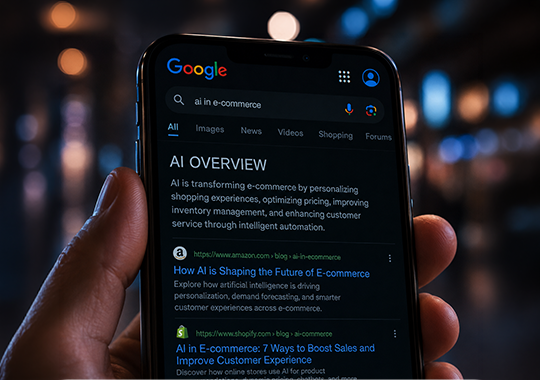
Showing up in AI answers matters more than ever. And it’s only going to matter more. Good news: every SEO move you make is great for GEO too. The two overlap a lot. A category that’s getting stronger on Google has a better chance of showing up in AI engines too. That’s especially true for AI Overviews. Right now, they might be the most important source of your organic AI revenue.
There’s one big difference between SEO and GEO, especially in November. GEO means creating content built for AI engines and for high-intent shopping questions.
Here’s the deal. People ask chatbots for advice. A lot. Many times a day. And AI almost always leans on articles and guides. So your content needs to answer those questions. That means your blog, and other parts of your site too. That way, AI will pull you up as a recommendation. Ideally, on topics that lead to a purchase.
How to Have a Happy, Strong Organic November
True, to see results in November, you need to start months ahead. But if you start the right SEO process today, next November can look very different. More exposure. More traffic. More revenue in the most important month of the year. Good planning helps you make the most of this month without relying only on paid ads. At the end of the day, a big part of your growth comes from organic. It takes patience. And sometimes a bit of thinking outside the usual digital box.


Still curious?
Is Your Website Ready for the Big Shift? AI Overview Is Changing the Rules of the Game

How Do You Create Content Built for the AI Era?